Frontier Technology for Social Impact
A working field guide to the technologies reshaping work, governance, and daily life, read through the lens of my research.
In my day-job, I track and invest in next-generation technologies with a specific question in mind: does this reduce inequity and expand human dignity, or concentrate power and narrow it? The six domains below are the ones I follow most closely, each connected to the governance and psychology questions explored in the Citizen trilogy.
1. Post-Moore & Novel Computing Architectures
Computing is diversifying beyond general-purpose chips toward specialized hardware — quantum processors, neuromorphic chips modeled on brain-like processing, and photonic systems built for specific AI workloads. This shift underlies the cost curve behind the Intelligence Inversion described in Citizen 6.0: as the marginal cost of synthetic cognition keeps falling, the economic and governance questions in Citizen 5.0 — including the Stiefenhofer PowerShift Index (S_norm) — become more urgent, not less.
2. Genomics & Synthetic Biology: The Read-Write-Edit Era
Genomic sequencing has reached the long-promised “$100 genome,” and CRISPR-based therapies and personalized digital-twin health models are moving from research into deployment. Like AI, this is a technology of radically falling marginal cost — which means the governance questions are the same ones the trilogy asks about compute: who owns the models, who benefits from the surplus, and who is left as a dependent tenant of the platforms that hold the data.
3. Nanotechnology & Advanced Materials: Programmable Matter
Materials science is moving toward programmable matter — nanoscale devices and materials that change properties on command, with early applications in cellular-level medicine and adaptive infrastructure. This is an area I watch closely for applications in resource-constrained regions, where programmable, low-cost materials can leapfrog conventional infrastructure.
4. Next-Generation Energy Systems
Energy storage is diversifying beyond lithium-ion toward solid-state and alternative chemistries, even as compute-hungry AI systems put new pressure on grids and water use. Citizen 5.0’s Joule Standard concept — a thermodynamic guardrail tying digital activity back to real energy and ecological limits — grew directly out of this tension.
5. Robotics, Embodied AI, and Bionics
Robotics and embodied AI are converging with bionics to produce adaptable systems for logistics, healthcare, and caregiving. This is also where the psychological questions in Citizen 6.0 become concrete: as synthetic systems take on embodied, relational roles, the Four Asymmetries between human and synthetic cognition stop being abstract and start shaping daily working life.
6. Multimodal Analytics, Natural Interfaces, and Cognitive Symbiosis
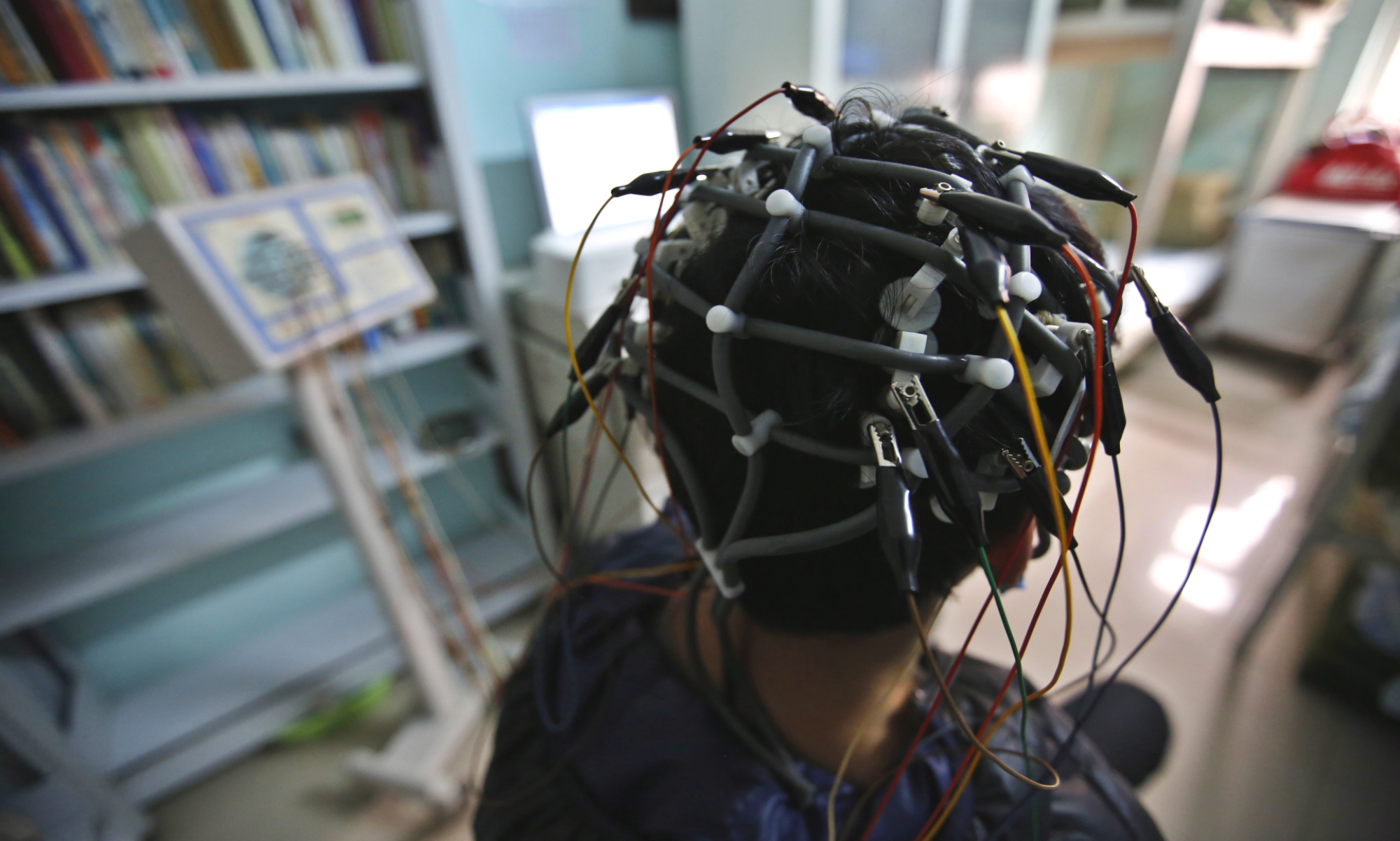
The frontier here is human-machine symbiosis: multimodal AI, spatial computing, and adaptive neural interfaces that respond to voice, gesture, and context together. This is the terrain Citizen 6.0 and Citizen 7.0 spend the most time in — what it means to live, work, and form relationships alongside systems that increasingly read us better than we read them.
Forward outlook
None of these six domains advances in isolation, and none of them is neutral. The throughline of my work, my advisory roles, and writing, specifically, the Citizen trilogy, is the same question applied to each: does this technology get built toward equitable, ethical, and ecologically sustainable outcomes, or does it entrench the people who already hold the infrastructure? For advisory or speaking engagements on any of these domains, see engagement details or get in touch.
Citizen 5.0, Citizen 6.0, and Citizen 7.0 are published by CRC Press, an imprint of Taylor & Francis Group. Publication dates for Citizen 6.0 and Citizen 7.0 are provisional pending final publisher confirmation.